According to our latest research, 90% of companies have set at least one GHG reduction target in 2025. But behind this number lies a more complicated reality.
Our new report — From Targets to Transition: Deep-Dive on Corporate Greenhouse Gas Targets in 2025 — analyzes more than 1,630 GHG target statements from 110 company reports across scopes 1, 2, and 3.
The report reveals where companies are demonstrating real ambition and where gaps in scope clarity, milestone planning, and depth of reductions undermine credible transition pathways.
Ambition is high, but many companies avoid net-zero commitments
Most companies set near-term (2025–2030) absolute reduction targets and long-term 2050 net-zero objectives. But:
- 22% of companies have no net-zero pledge
- More than half have not committed to carbon neutrality
- And six in ten companies target less than 80% emissions reductions
These findings reveal that while ambition is high on paper, many companies still lack the depth necessary to achieve meaningful decarbonization.
The visibility gap: Missing milestones between 2030 and 2050
One of the notable findings in our analysis is the absence of credible transition pathways. While 2030 and 2050 targets are now common, the decades in between remain largely silent.
Very few companies disclose:
- Intermediate reduction milestones
- Evidence of alignment between short-term operational actions and long-term goals
For stakeholders, this “visibility gap” raises questions about credibility and readiness. Companies are anchoring their targets to external frameworks (like the Paris Agreement or SBTi), but are not seemingly translating those frameworks into company-specific transition plans.
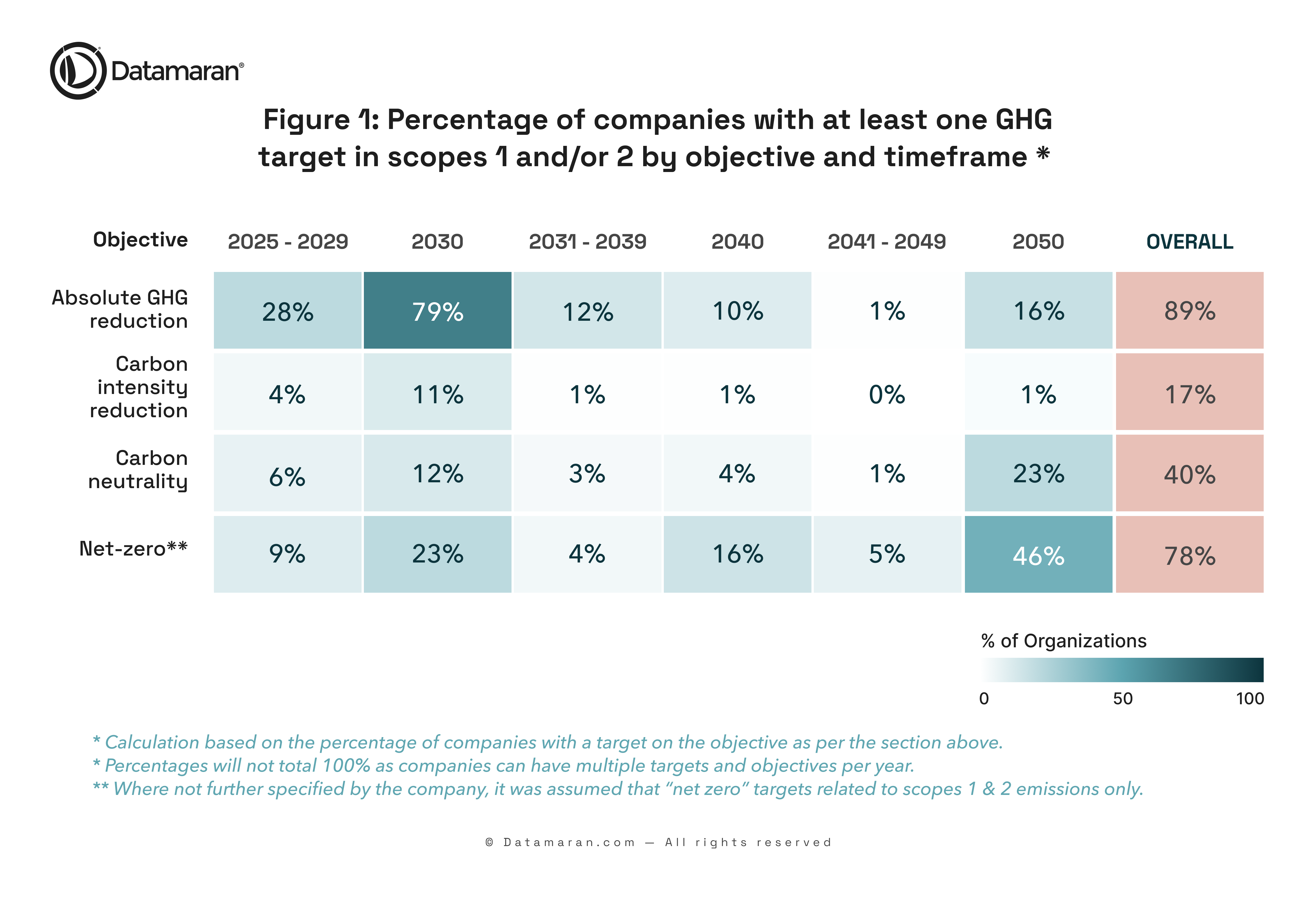
Only 10% of companies set an absolute GHG target for 2040
This table shows the percentage of companies with at least one GHG target in scopes 1 and/or 2 by objective and timeframe.
Scope 3 coverage is inconsistent
Although Scope 3 emissions often represent the majority of a company’s footprint, target adoption remains inconsistent.
Our analysis shows:
- Wide variation across sectors
- Far fewer long-term or net-zero targets for Scope 3
- Limited evidence of plans to manage value chain emissions at scale
The complexity of value chain data continues to hinder progress — but the pressure to address it is only accelerating.
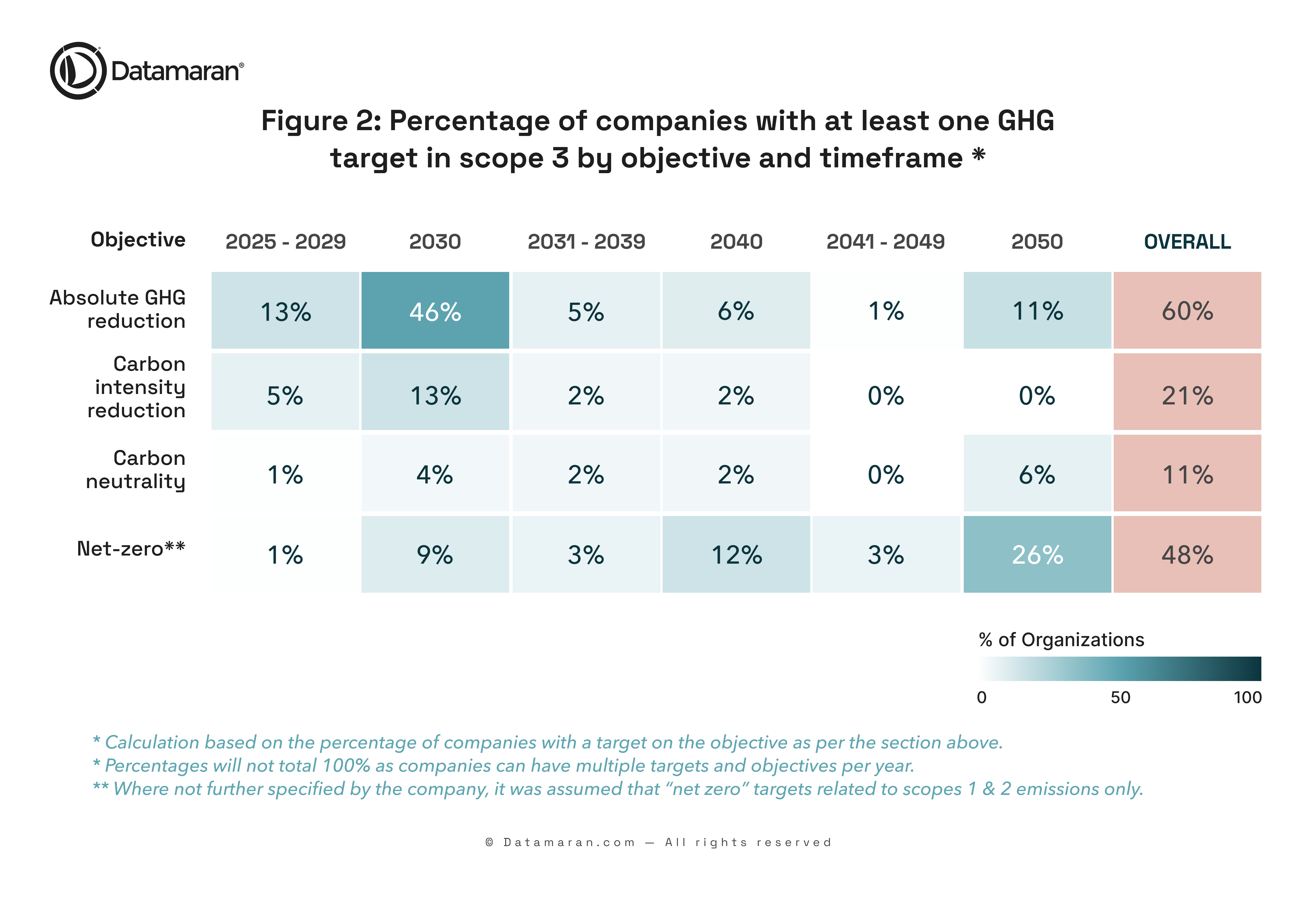
26% of companies set a net-zero target by 2050 in scope 3
This table shows the percentage of companies with at least one GHG target in Scope 3 by objective and timeframe.
Get a more detailed view of GHG target setting
Our latest report aims to help companies create transparent, credible, and connected targets that link short-term action with long-term transition goals, strengthening accountability and building stakeholder trust.
Download the research report to learn:
- How companies structure GHG targets across scopes 1, 2, and 3 – and where ambition falls short
- The emerging 2030–2050 visibility gap and why it poses credibility risks
- How deep (or shallow) corporate net-zero and neutrality pledges truly are
- The sectors leading and lagging in scope 1, 2 & 3 coverage and long-term ambition
- Practical steps to set measurable, time-bound, IFRS/ESRS-ready GHG targets
How Datamaran supports your sustainability work
Datamaran provides a systematic, data-driven, and audit-ready approach to identifying, assessing, and monitoring ESG-related risks, impacts, and opportunities. By transforming data into actionable intelligence within a collaborative workflow solution, Datamaran enables informed decision-making that mitigates risk, strengthens governance, and drives sustainable growth.
With Datamaran, organizations can:
- Continuously monitor the landscape: Always-on intelligence identifies emerging issues, risks, and regulatory changes across markets and stakeholders.
- Prioritize material issues: Evidence-based insights inform strategy, strengthen governance, and focus resources on what matters most.
- Develop credible targets and policies: Benchmark and align goals with peer practices, stakeholder expectations, and regulatory requirements.
- Leverage an audit-ready workflow: A fully documented and traceable process provides confidence in data integrity, reporting, and decision-making.
Request a demo to see the Datamaran platform in action.

 3 min read